
Building for a Changing Climate
The climate is changing, so we are planning and building alongside it.
At a certain point, it becomes less useful to argue about cause than to respond to reality. Whether people understand climate change through carbon emissions, natural cycles, or some combination of both, the practical conclusion is the same: the conditions around us are shifting, and the places where we live need to shift with them.
In Massachusetts, that means homes must be designed for more than winter.
For generations, New England construction was shaped primarily by cold weather. Thick walls, heating systems, storm windows, and fireplaces all reflected a regional priority: get through the winter. That is still important, but it is no longer enough. Summers are hotter. Humidity is more persistent. Heavy rain events are more common. Groundwater and drainage issues are affecting more urban sites. Power interruptions and energy volatility are becoming part of the conversation. Even air quality, once thought of as a distant regional concern, is now something homeowners in New England have experienced directly through wildfire smoke from hundreds of miles away.
Buildings are no longer just shelter. They are environmental systems.
That changes how we think about architecture.
At Group Design Build, we focus on creating homes that remain comfortable, healthy, and durable under changing conditions. That means designing buildings that require dramatically less energy to operate, maintain stable indoor temperatures during periods of extreme heat or cold, and manage moisture and air quality far better than conventional construction.
Our approach starts with reducing demand before adding technology.
Instead of relying on oversized mechanical systems to compensate for inefficient construction, we design the building itself to perform. A highly insulated, airtight envelope reduces heating and cooling loads before the mechanical system ever turns on. High-quality windows, careful detailing, and reduced thermal bridging help the house hold stable interior temperatures. Balanced ventilation brings in fresh filtered air while recovering energy from the air leaving the building. Moisture management is considered from the foundation to the roof.
This creates homes that are not only more efficient, but also quieter, healthier, and more durable.
Case Study: Danehy Dwelling, Cambridge MA
Danehy Dwelling in Cambridge is a clear example of this thinking in practice.
The project became Group Design Build’s first certified Passive House and LEED Platinum home, as well as our first net-positive residence. It was designed to produce enough energy over the course of a year to support the home, electric vehicles, and surplus capacity beyond its own operating needs.
But the project was never simply about certifications or technology. It began with a more lasting question: how do you create a long-term family home that remains resilient, comfortable, and efficient for decades?
The site itself presented serious challenges. The property had an extremely high water table, making foundation design and waterproofing central to the success of the project. The home also needed to preserve and work around a 120-year-old tree, which shaped the design of the rear foundation and portions of the site strategy. These constraints required careful coordination between design, engineering, and construction from the very beginning.
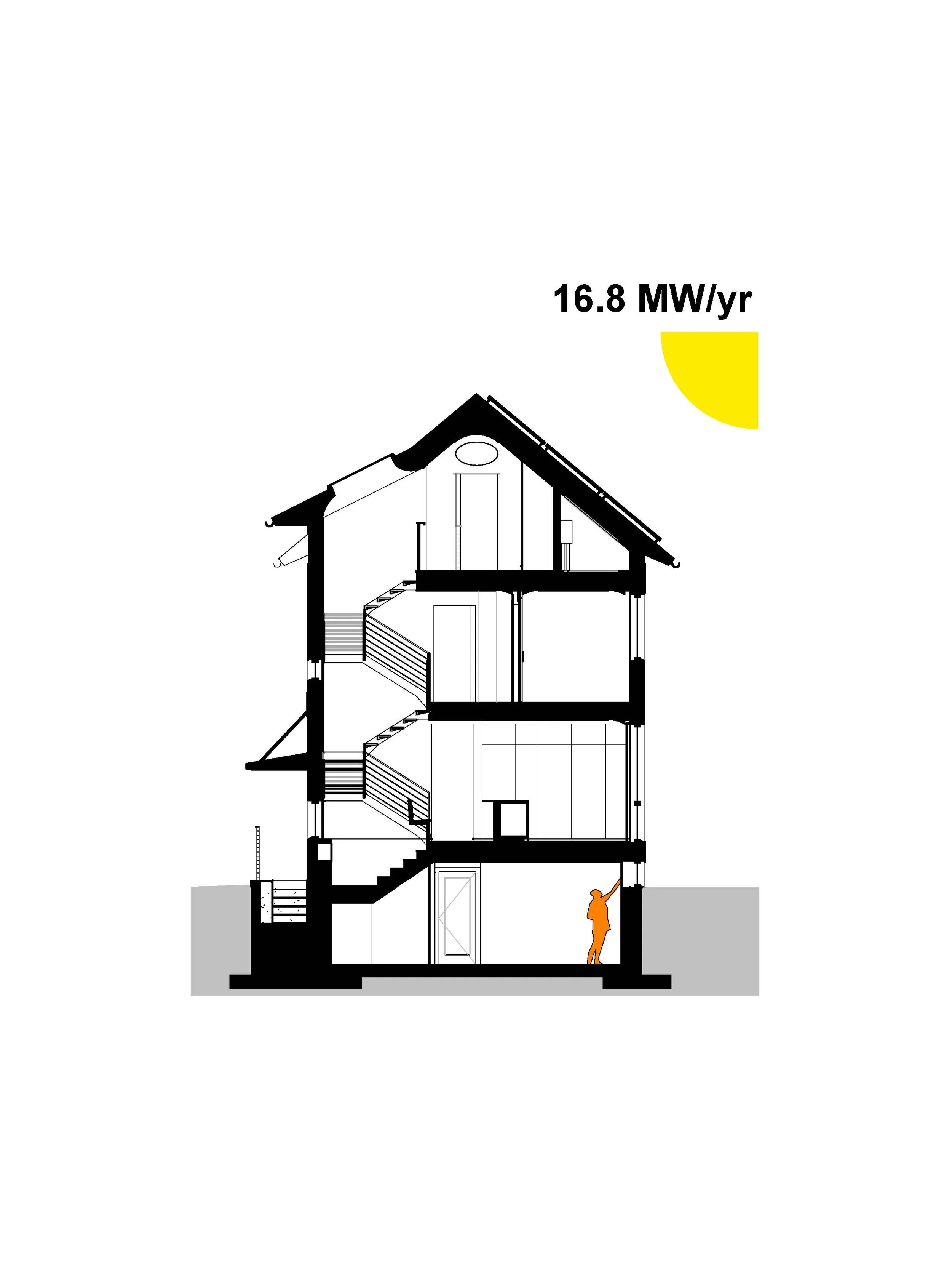
Optimized orientation and interior planning and dormers for the cleanest PV array
The performance goals were equally ambitious. The house needed to be fully electric, exceptionally efficient, filled with natural light, and capable of producing more energy than it consumed. Achieving that required an integrated approach rather than a collection of isolated upgrades.
The building envelope was designed first. By reducing the home’s energy demand at the architectural level, the mechanical systems could be smaller, quieter, and more efficient. The home’s ventilation system continuously delivers filtered fresh air while helping control humidity and indoor air quality. Carefully calibrated glazing and overhangs bring generous daylight into the house while limiting overheating during the summer months.
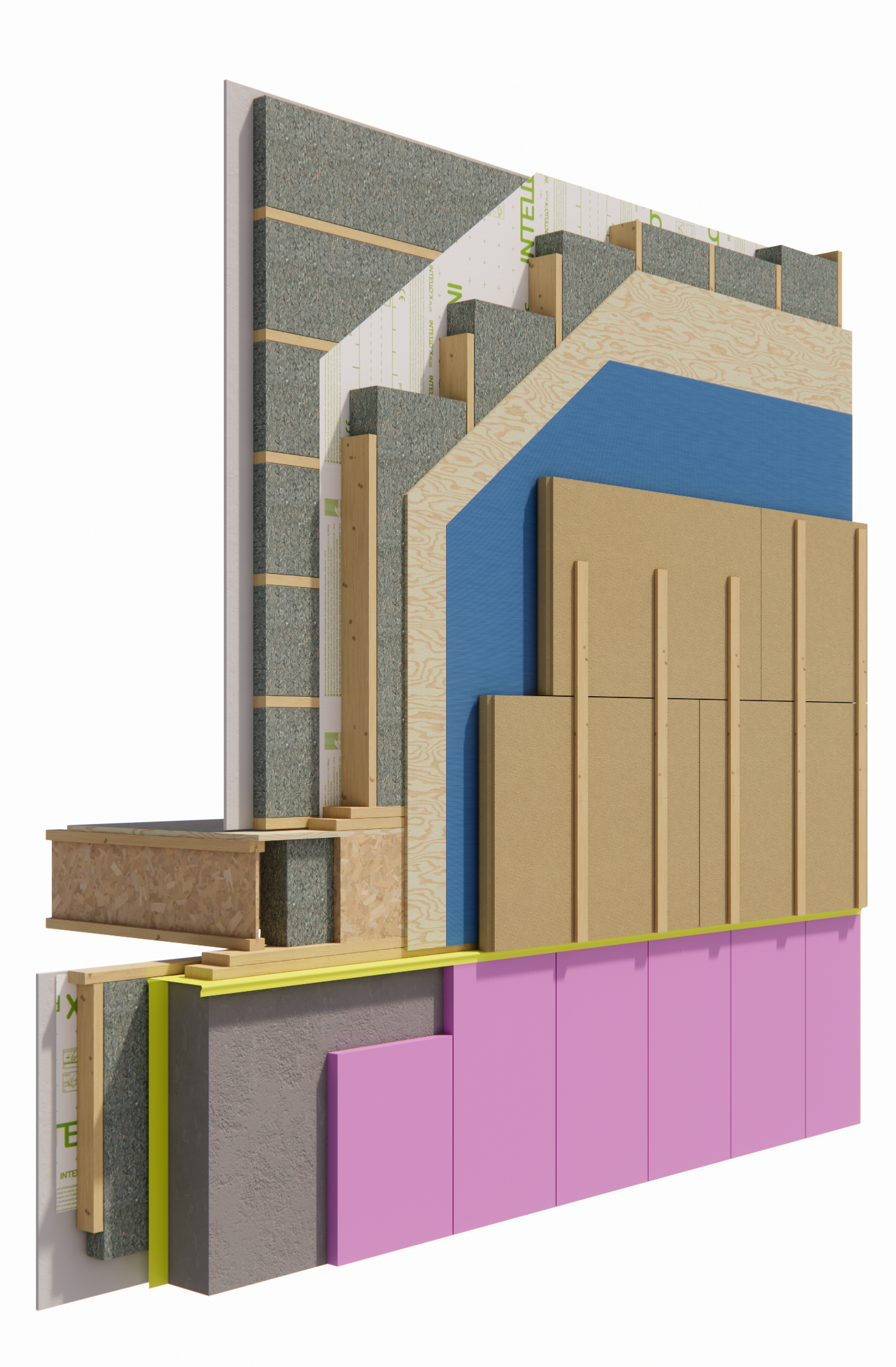
Assembled control layers for stable indoor temperature control, quietude, and fire resistance.
Because the home requires so little energy to operate, the solar array can offset far more than basic household use. Over the course of the year, the project was designed to support both the house and electric transportation, creating long-term operational savings and a greater degree of energy independence.
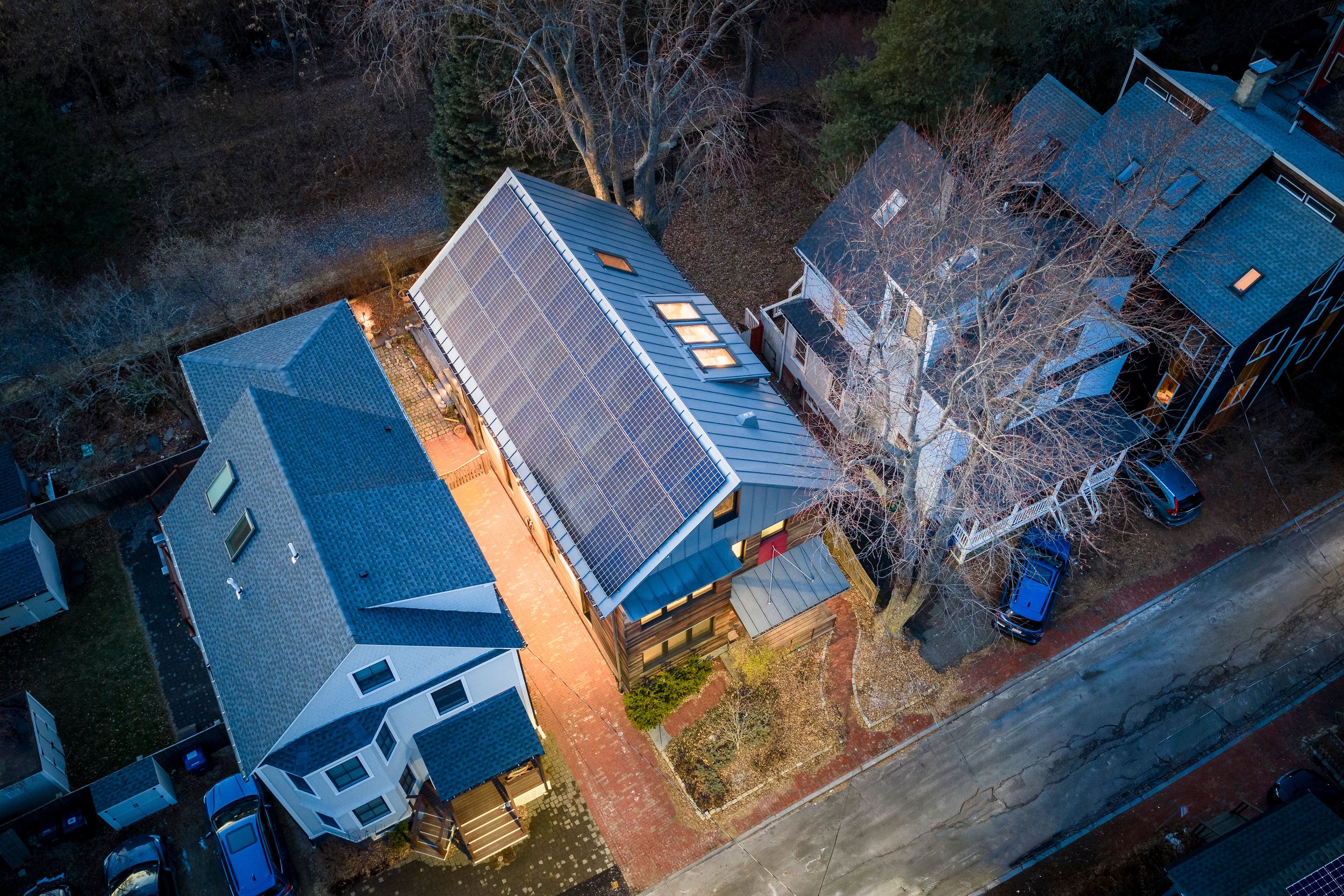
14.2 kWh consumption with 16.8 production
That is where high-performance design becomes resilience.
A well-insulated, airtight home loses heat more slowly during a winter outage. It resists heat gain longer during periods of extreme summer weather. It filters incoming air. It reduces dependence on fossil fuels. It lowers monthly operating costs. It gives homeowners more control in a world where energy, weather, and infrastructure are becoming less predictable.
Resilience Without Sacrificing Architecture
There is still a common misconception that high-performance homes must look technical, expensive, or visually austere.
Our work suggests the opposite.
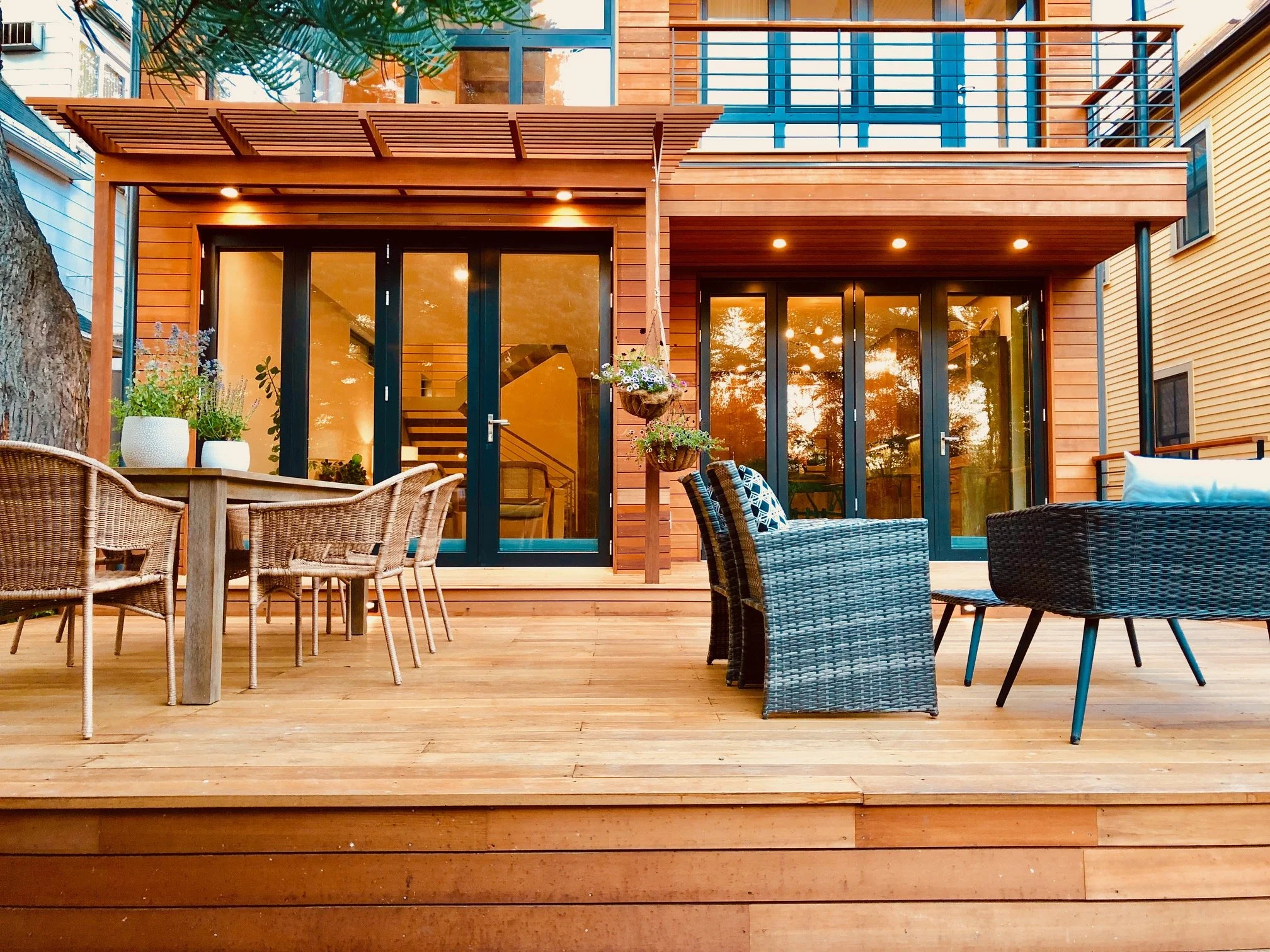
West facade is almost 90% glass. By pushing walls in, adding shading, roof overhangs, and properly specified glass: the home retains cool comfort in the summer and 37% free energy in the winter.
When performance is considered from the beginning, it can make architecture more disciplined and more intentional. Spaces become calmer. Mechanical systems are less intrusive. Indoor comfort becomes more consistent. Natural light can be carefully controlled rather than treated as a problem. Durability is built into the design rather than added later as a fix.
Performance and architecture do not need to compete with each other.
At their best, they support each other.
Looking Forward
The future of residential construction in New England will likely demand a higher standard than previous generations considered normal. Homes will need to manage wider temperature swings, more intense rain, increased humidity, changing air quality, and the transition away from fossil fuels. They will need to use less energy while doing more work.
For us, resilience is not about fear or trend-chasing. It is about practicality.
